


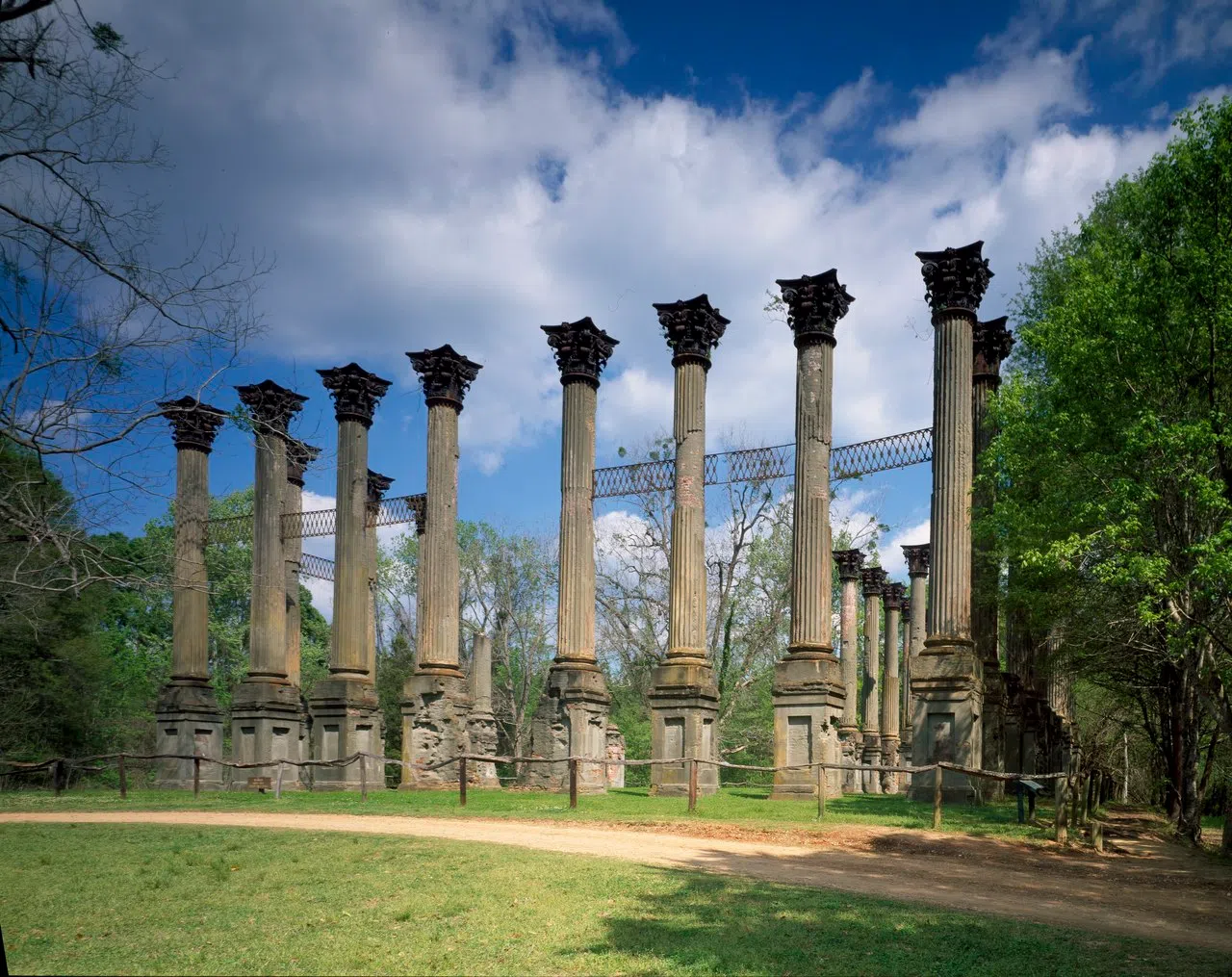
February 17, 2026, marks a somber anniversary in the history of Claiborne County, Mississippi. On this day in 1890, the Windsor mansion, once the largest antebellum Greek Revival residence in the state, was tragically destroyed by fire.
Construction of the Windsor mansion began in 1859 for Smith Coffee Daniell II, a wealthy cotton planter. Built by enslaved African Americans and supervised by architect David Shroder, the project was completed in the spring of 1861. The massive home covered 17,000 square feet and featured between 23 and 25 rooms, each with its own fireplace.
Its architectural profile was defined by 29 massive Corinthian columns, each standing 40 feet tall and topped with ornate iron capitals. The mansion was a marvel of its time, even including interior bathrooms supplied by rainwater tanks in the attic. Smith Daniell died on April 12, 1861, just weeks after the home was finished.
During the American Civil War, Windsor served as a strategic point for both sides. Confederate forces utilized its domed cupola as an observation platform and signal station. In 1863, after Union General Ulysses S. Grant landed nearby at Bruinsburg, Federal troops took control of the mansion, using it as both a hospital and an observation post following the Battle of Port Gibson.
The mansion survived the Civil War and remained a center for social gatherings for decades. However, on that fateful day in February 1890, disaster struck when a guest dropped ashes from a cigarette or cigar into a pile of construction debris left by carpenters on the third floor. The resulting fire consumed the wooden structure, leaving behind only the iconic brick and stucco columns, cast iron stairways, and balustrades.
Today, the site is known as the Windsor Ruins, a haunting and popular historical attraction administered by the Mississippi Department of Archives and History (MDAH). Of the original structure, 23 full columns and five partial columns remain standing on the 2.1-acre site.
Listed on the National Register of Historic Places and designated a Mississippi Landmark, the ruins continue to capture the imagination of visitors and have even been featured in films such as Ghosts of Mississippi. In 2023, MDAH completed a stabilization project to ensure these “silent sentinels” remain standing for future generations to reflect on Mississippi’s complex past.


Comments