


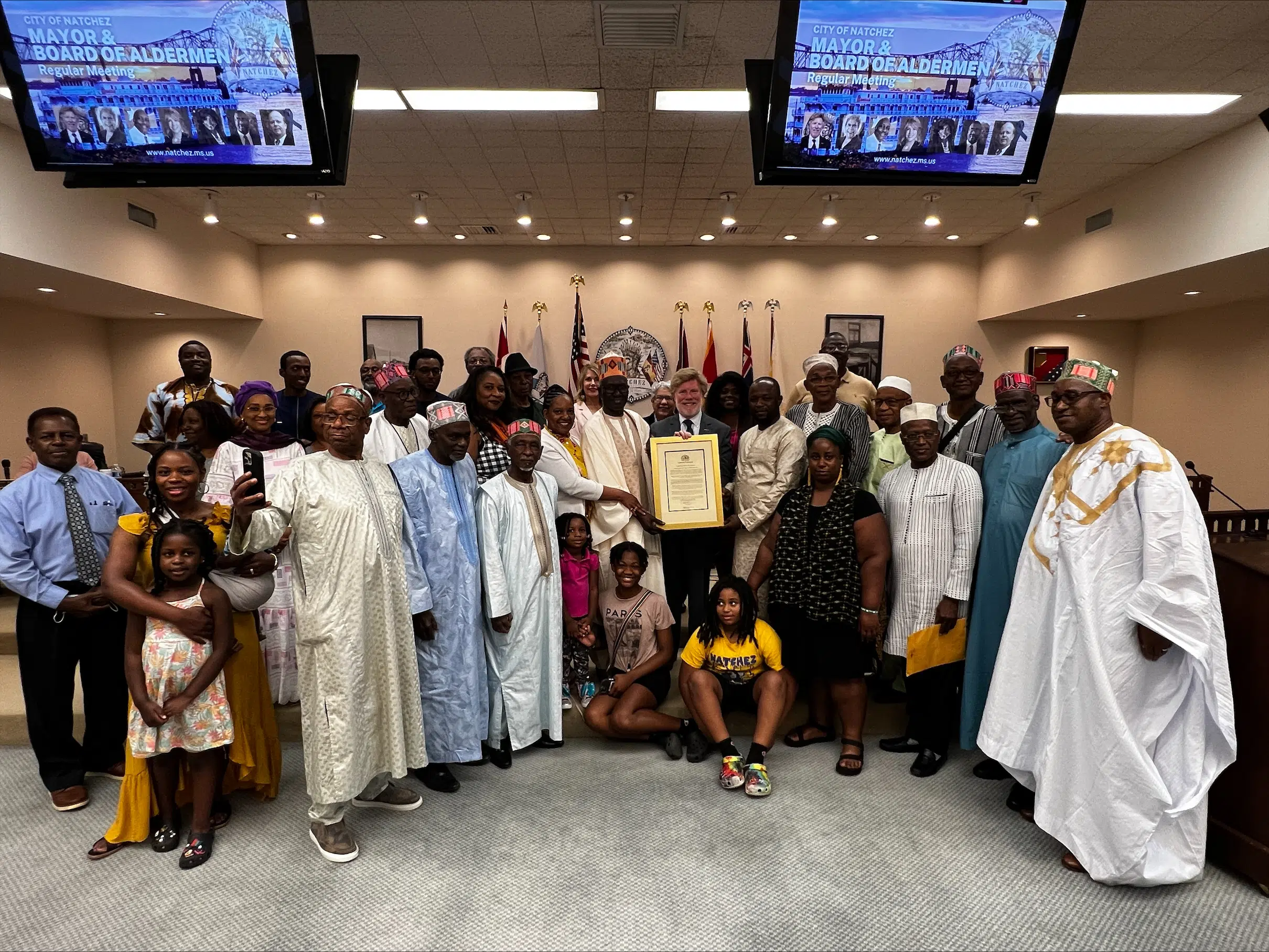
NATCHEZ, Miss. – The mayor and aldermen on Tuesday honored a delegation from Guinea, the African country from where a prince in 1788 was brought to the Natchez area and enslaved for 40 years.
The delegation of about 20 visitors include descendants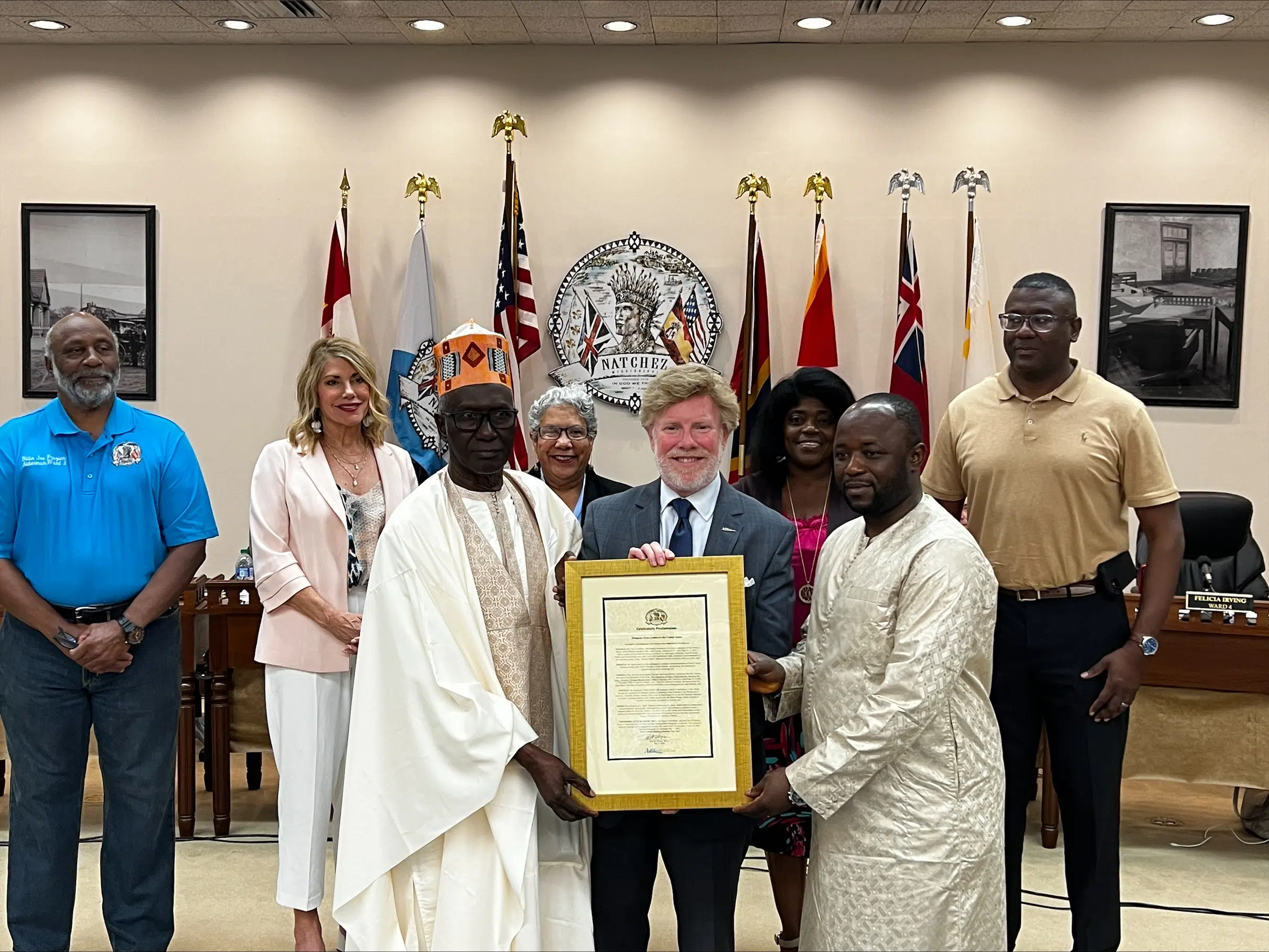 of Prince Ibrahima and are in Natchez this week sightseeing and meeting with various people, including cousins living here.
Proclaiming Tuesday “Prince Abdul Rahman Ibrahima Ibn Sori Day,” Mayor Dan Gibson said it’s “a very historic day for us” as the city gives “a very belated honor” to the enslaved monarchal son, who has become “a permanent fixture of Natchez and American history.”
Ibrahima was captured by rival African warriors, sold to slave traders and transported to Adams County, where he was enslaved on a plantation before being freed in 1828 to return to his African homeland.
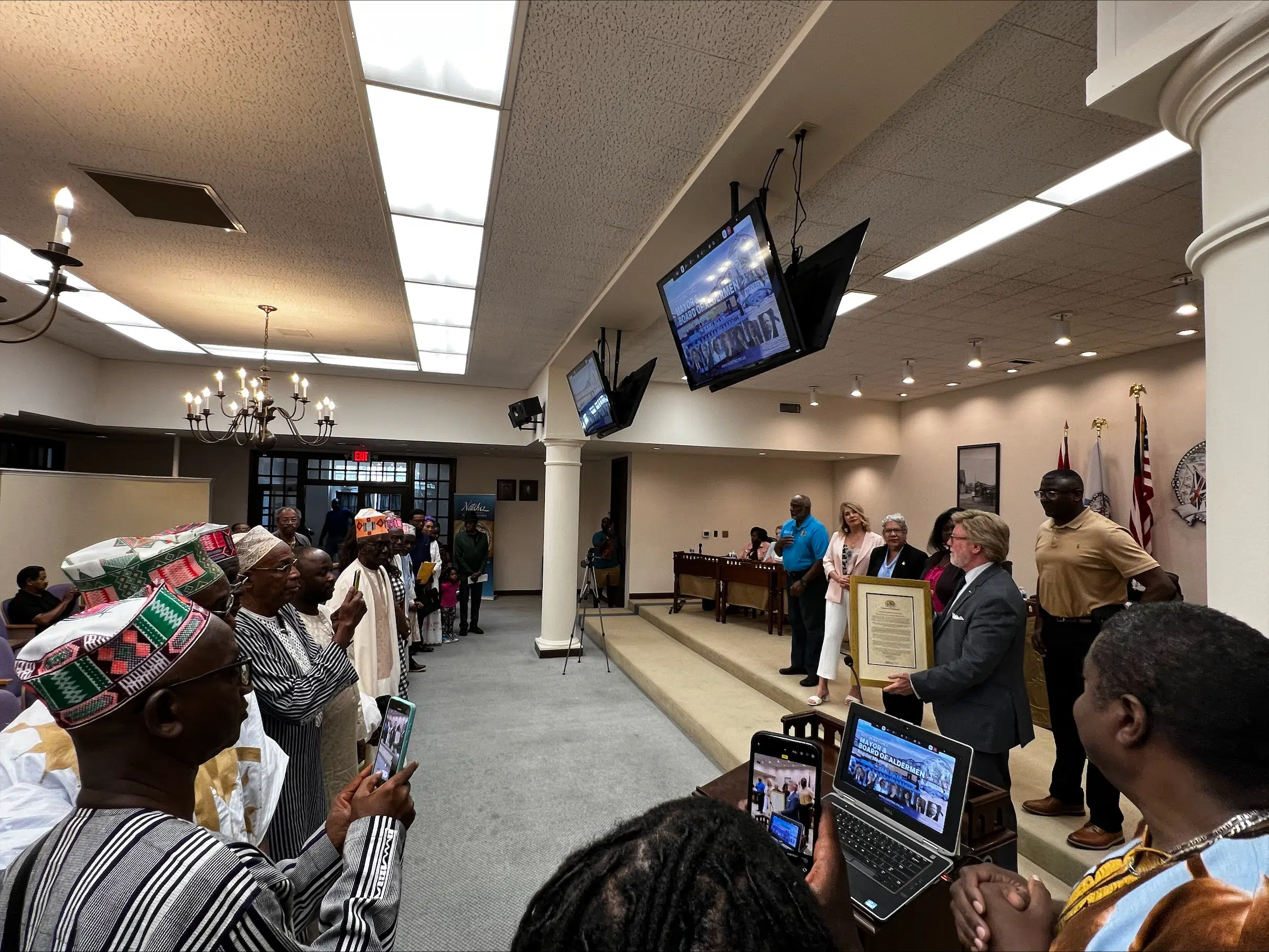
The delegation visiting Natchez includes the Republic of Guinea’s secretary general, who presented the mayor with a traditional African robe Gibson donned during Tuesday’s meeting. The mayor presented the Guinean delegates with a framed proclamation honoring them and Prince Ibrahima.
The Muslim delegation’s itinerary included dinner at Concord Quarters – the former slave dwelling in Natchez – and a visit to the International Museum of Muslim Cultures in Jackson, where a meeting with Jackson Mayor Chokwe Antar Lumumba was also scheduled.
The Guinean delegation is also scheduled to attend a symposium about Ibrahima and wife Isabella at the Natchez Museum of African American History and Culture to be held today at 6 p.m.
 Various historical books and accounts have been written about Ibrahima – the “Prince Among Slaves” – who was the son of Sori, a king of the Fouta empire now part of Guinea.
He was enslaved by Thomas Foster on his north Adams County plantation. Ibrahima was eventually freed when Natchez newspaper publisher Andrew Marshalk campaigned for the prince’s emancipation. Ibrahima traveled up the East Coast to raise money to pay for his family’s freedom and wound up visiting President John Adams at the White House. While Ibrahima was able to eventually travel back to Africa, he fell ill and died in 1829 before he could make his way inland to his native home.
The delegation of Ibrahima’s descendants is planning to visit the White House before returning home to Guinea.
The French-speaking country in west Africa gained independence from France in 1958. With a history of military coups since then, President Conde was overthrown in 2021, according to information from the U.S. Department of State. The U.S. continues to urge Guinea to hold free and fair elections and return the country to a constitutional, civilian-led democracy.



I met the Royal Family of Prince Sori from Guinea Elder Mody Oury and the direct decendents Princess Karen Chatman who was delightful to meet from my hometown Natchez Mississippi, Dr. Artemus Gaye from Liberia and a lot of other families that I know from Natchez at Natchez Museum of African American Culture and history Symposium .